Riiinnng.
“Thanks for connecting with Northwood Tree Care. How can we help?”
“I need you to cut down my oak tree.”
“Thanks for asking about removing your tree, but we are the company to call when you don’t want to remove your trees!”
Yes, owner and ISA Board Certified Master Arborist Arch Autenreith and his company focus only on “preserving trees whenever possible” as per northwoodtreecare.com. I suggest that everyone visit it to learn more, even if you are not a potential client.
The primary objectives of the company are to preserve trees, protect ecosystems, and promote the relationship between people and the environment.
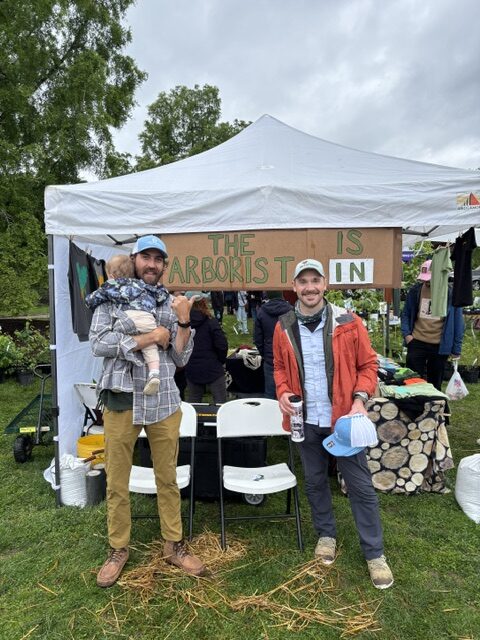
Northwood Tree Care are a Wild Ones Business Member serving the greater Pittsburgh region. they are based out of the North Hills, and currently employ 6 arborists in addition to Arch.
Northwood is comprised of multiple Board Certified Master Arborists certified with the International Society of Arboriculture, in addition to multiple ISA Certified Arborists and Tree Risk Assessment Qualified Arborists. A locally based office staff assists with communication and administration.
They are the only local tree service which has achieved Sustainable Landcare Professional Accreditation through Phipps Conservatory. This attests to their commitment to trees as components of eco-systems, research based, ethical practices and continually learning more.
For example, they avoid synthetic fertilizers and limit the use of chemicals in the environment, with the exception of targeted management of specific key pests which severely damage or kill certain native trees including ashes, elms, hemlocks and oaks.
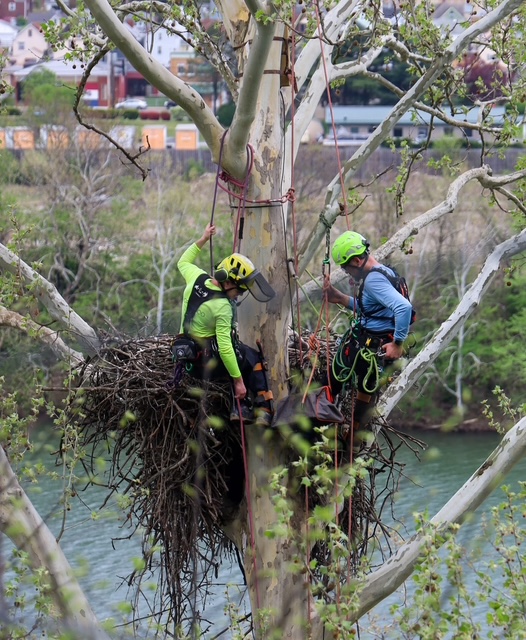
Arch was initially attracted to tree work at age 17 due to the excitement and challenges. “It’s like rock climbing with a chain saw.”
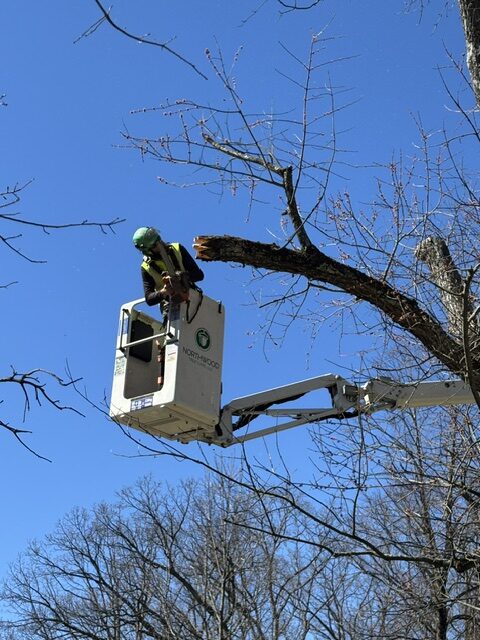
After working in the field for several years, he felt compelled to start a business which would be more likely to help trees than contribute to their demise. A fundamental approach is to prune relatively small peripheral branches rather than larger ones closer to the trunk.
They take a long view, including often recommending planting younger trees which eventually thrive better than ones which are initially larger but lose most of their roots in the planting process.
They work mainly for individual home-owners but are cultivating relationships with communities including municipalities and HOA’s.
They are expanding their work as consulting arborists, preferring to get involved as early as possible in selecting trees suitable for sites and the goals of clients.
They are committed to educating the public and sharing their expertise with other arborists.
Arch sees the importance of public policy including developing appropriate ordinances and providing funding for under-resourced communities which often benefit most from tree cover. He favors requiring people who work with trees to have at least minimal qualifications.
He encourages people to see trees as one of the few assets that appreciate in value rather than depreciate.
Lead arborist Burlton Griffithcombines focused hazardous physical work with an expansive curiosity about trees, plant communities and native plant and insect interactions.
He mentions that Northwood’s favorite tools are the handsaw and an air spade*, not the chainsaw. In addition to tree canopies, they pay careful attention to root zones.
Burlton is also an ISA Board Certified Master Arborist, and he double majored at Pitt in neuroscience and the history and philosophy of neuroscience! BTW, fungal networks connecting trees function remarkably similarly to neurons in our brains.
Burlton also teaches classes about soil and trees through Phipps, in addition to speaking and leading walks about pollinators, fireflies, and native plant communities, and volunteers as a PA Master Naturalist.”
He is likely to start a presentation by describing how rocks that were formed billions of year ago continue to influence which plant communities thrive where.
Another of his interests is the history of intentional fires managed by indigenous peoples and modern adaptations of them.
*Link to video about uses of air spades in tree care: https://www.youtube.com/watch?v=nhMc7teyEPs
Ed Wrenn