Think of a favorite tree or shrub from your past or present.
Perhaps it was a stately oak in front of your house.
Maybe it is a red maple with bright fall colors.
Could it be an American Pawpaw, although another one would be needed nearby in order to produce fruit.
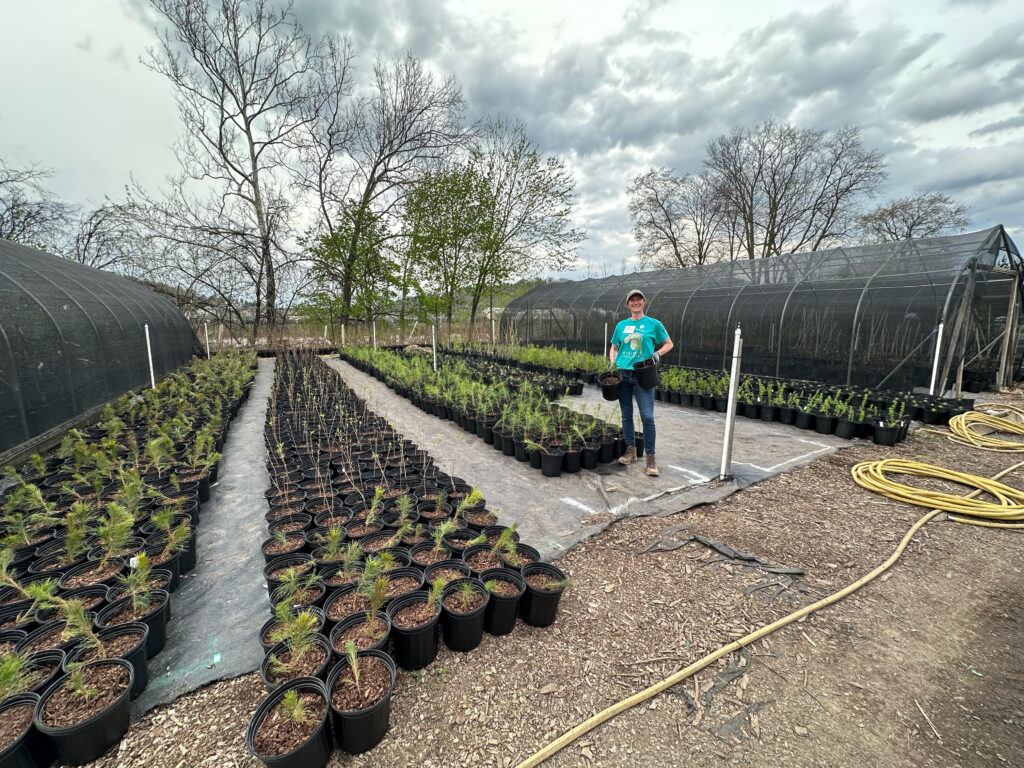
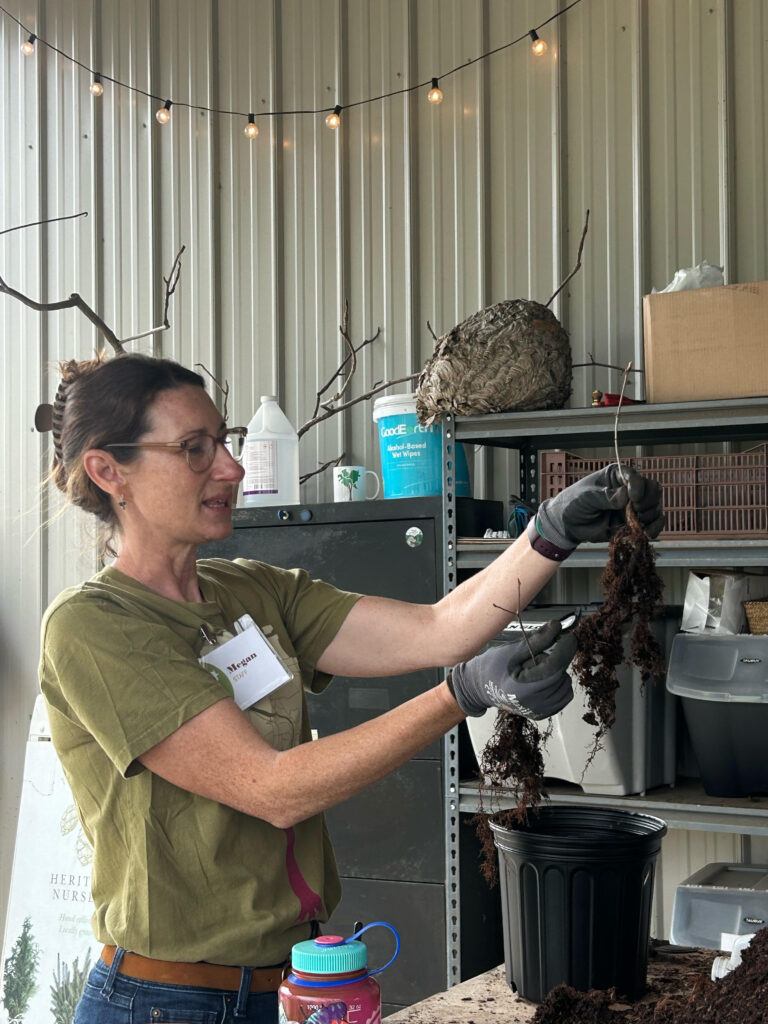
Multiply that by over 100,000, then you’ll have a better appreciation for Megan Higgins-Palomo, Director of Tree Pittsburgh’s Heritage Nursery since 2014.
She and her team grow a total of about 20,000 tree and shrub seedlings each year. 95% are native to Western PA or at least the mid-Atlantic. They grow many of them from seeds that they collect from the wild in our eco-region, the Allegheny Plateau.
Last year, 6,216 of the seedlings were given away free by the tree adoption program.
Some may live 100’s of years, rivaling the “Penn Tree” in Richland Township. It is a white oak which is 428 years old.They will produce their own seeds and clones to become even more beneficial.
To put this into perspective, according to the Pittsburgh Urban Forest Master Plan (published in 2012,) Pittsburgh was estimated to have 2,628,000 trees in 2011. A large percentage are non-native.
BTW, the first Tree Pittsburgh Pawpaw Fest on 9/26 sold out, but wait for an even bigger and better one next year!
Of their few non-invasive non-natives, most are conifers. This is because they provide year-round ecosystem services while our native ones are declining due to climate change and disease and pest pressures.
Most other natives can be more resistant to the pests and diseases which they have co-evolved with in our area.
When pests do impact the nursery stock at the Heritage Nursery despite prevention, they allow natural predators, including parasitic wasps, to knock back outbreaks. This minimizes the use of any broad-spectrum pesticides.
One can buy wholesale a minimum of 10 trees or shrubs of any variety. The order could be shared with others for smaller gardens.

You may email [email protected] for a current list of available plants.
You may go to treepittsburgh.org to find out about free tree adoption events and ways for organizations to obtain them.
Deer are, of course a major challenge. They use wire cages on maturing trees at their site to deter browsing and buck rubbing. Fencing is a possibility for home or larger landscapes.
They, and Tree Pittsburgh as a whole, prioritize providing plants and other services to less wealthy communities with low tree coverage. Tree Pittsburgh has about 7000 volunteers, including 2.200 tree tenders.
Megan supervises 5 employees and about 300 volunteers. The plants seedlings that they grow are sold or given away to “local environmental groups, contractors, designers and individuals” for large restoration projects down to individual gardens.
According to Megan, a great place to plant native trees and shrubs can be slopes which are difficult and dangerous to mow and otherwise maintain. They can prevent erosion and landslides. “Every single hillside should be turned into habitat for wildlife.”
For those hoping to work as professionals advancing more natural landcare, be aware that there are as many pathways as there are people. Unlike Megan’s, many don’t initially require much experience or specific education.
She began her path as a chid.
Her grandfather, with his brothers, started Michael Brothers Nursery, which is still in the family.
While getting her undergraduate degree in landscape architecture at Cornell University, she spent two semesters studying architectural and urban design at the Edinburgh College of Art in Scotland.
The most fun part of her job is plant selection and site assessment
The most difficult is making sure that she and her teams are able to accomplish the right things at the right times for each of the 100+ species that they grow.
She lives in Friendship and has 3 pawpaw trees in her garden. She was thrilled to see a zebra swallowtail there this summer because It is a species that disappeared from this region about 90 years ago. It must have pawpaw leaves to survive because their caterpillar larvae eat nothing else.
She favors keystone plants such as Oaks as recommended by Doug Tallamy of the Homegrown National Park.
Other favorites are fragrant sumac, hornbeams and spicebush, after which the spicebush swallowtail is named.
She hopes to shift public perceptions of desirable landscapes to include plants that are both beautiful and essential parts of native ecosystems.
She is grateful for her many mentors and collaborators who helped her build the nursery, especially her parents.
Like others in this series, she advices people who would like to work in more natural landcare to try different experiences to find things that are beneficial that they love and are proficient at.
Ed Wrenn